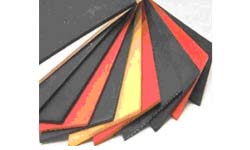
If you’re a procurement professional grappling with leaky flange connections, vibration-induced seal failures, or the constant headache of custom-cut gaskets, you’ve probably wondered: How does self-adhesive Gasket Tape work? At its core, this smart sealing solution combines a high-performance compressible gasket material with a pressure‑sensitive adhesive backing protected by a release liner. When you peel away the liner and press the tape onto a clean surface, the adhesive forms an instant mechanical and chemical bond—no clamping force, curing time, or messy liquid sealants required. The gasket itself then fills microscopic irregularities in the mating flange, creating a continuous, long‑lasting barrier against fluids, gases, and environmental contaminants. For procurement managers, that translates into dramatically reduced inventory, faster maintenance turnarounds, and the ability to seal irregular shapes on the spot. Ningbo Kaxite Sealing Materials Co., Ltd. has perfected this technology, engineering self‑adhesive gasket tapes from expanded PTFE, silicone, and other advanced polymers that withstand extreme temperatures (−200 °C to +260 °C), aggressive chemicals, and outdoor weathering. The result is a field‑proven product that cuts installation time by up to 70% while delivering a reliable, leak‑free joint. Whether you’re upgrading a food‑grade pipeline, weatherproofing an electrical enclosure, or tackling emergency repair on a ship, understanding how self‑adhesive gasket tape works is the first step toward a leaner, more responsive supply chain.
Many maintenance teams face recurring leaks because conventional gaskets require precise compression and often creep or relax over time. The adhesive layer in modern self‑adhesive gasket tape functions as a viscoelastic pressure‑sensitive system that responds to surface energy rather than bolt load. When the tape is applied, the adhesive flows into micro‑valleys, bringing the gasket material into intimate contact with the substrate. As the adhesive cures or stabilizes, it maintains a resilient seal even when there is zero external pressure—ideal for low‑load plastic flanges or inspection doors that cannot tolerate heavy clamping. Ningbo Kaxite’s R&D team formulates these adhesives to match the specific chemical exposure of each job, so a single tape can replace multiple pre‑cut gaskets in a plant’s inventory. The backing material, often expanded PTFE, provides chemical inertness, conformability, and the ability to thermally cycle without hardening. This combination of instant stick and long‑term integrity explains why procurement specialists in the oil & gas and pharmaceutical sectors are moving to self‑adhesive solutions wholesale.
Imagine a food processing plant where a mixer lid seal fails at 3 a.m. The traditional fix involves shutting down the line, searching for the correct pre‑cut gasket, and wrestling with adhesive sprays that may contaminate the product. With self‑adhesive gasket tape, the maintenance technician simply cleans the surface, cuts a length of tape from the roll, and applies it in minutes—the lid is back in service before the shift manager notices. This scenario illustrates three chronic pain points: excessive downtime, storage of dozens of gasket SKUs, and the risk of cross‑contamination. Ningbo Kaxite Sealing Materials Co., Ltd. addresses all three with tapes that are FDA‑compliant, non‑toxic, and available in a single roll that fits any shape. Another common challenge is sealing raised‑face flanges where the gasket must stay in place during vertical assembly; the self‑adhesive property holds the material perfectly, eliminating the need for alignment aids. In offshore installations, salt spray attacks mechanical clamps, but the adhesive bond on Kaxite tapes acts as a secondary seal that prevents under‑creep corrosion, extending the service life of the joint by years.
| Pain Point | Conventional Gasket | Ningbo Kaxite Self‑Adhesive Tape |
|---|---|---|
| Leak from thermal cycling | Retorquing required | Adhesive compensates for movement |
| Incompatible with irregular flanges | Custom cutting needed | Conforms instantly to curves |
| Long installation time | Hours to replace | Minutes to apply |
| Inventory complexity | Hundreds of SKUs | One roll fits many applications |
Even the best gasket tape fails if the surface is not prepared properly. Start by removing old gasket remnants and degreasing the flange with isopropyl alcohol or a suitable solvent. Dry the surface completely—moisture can interfere with the adhesive’s initial tack. Unroll the required length of tape from the Kaxite roll and, without touching the adhesive, position it on one end of the flange. Press firmly along the entire length, using a hand roller or the heel of your hand to exert even pressure. For corner joints or complex shapes, slightly overlap the layers by 2–3 mm and apply extra pressure at the overlap to avoid a spiral leak path. The image below shows a typical application on a V‑shape metallic joint where conventional gaskets would struggle.

Once applied, the joint can be put into service immediately—no cure time. For critical high‑pressure systems, Kaxite recommends a low‑pressure hydro test to confirm integrity before full operation. The tape can be removed cleanly later, leaving behind no residue, which simplifies future maintenance and upholds the equipment’s cleanliness standards. This user‑friendly process means that even non‑specialist crews can achieve a factory‑grade seal, significantly reducing the dependence on external service contractors.
Procurement decisions hinge on measurable data. Below is a summary of typical performance indicators for Ningbo Kaxite’s leading self‑adhesive gasket tapes versus generic alternatives. These values are derived from independent laboratory tests and reflect the consistency expected by global supply chains.
| Parameter | Ningbo Kaxite Expanded PTFE Tape | Generic Rubber‑Based Tape |
|---|---|---|
| Temperature Range | −200 °C to +260 °C | −30 °C to +100 °C |
| Chemical Resistance | pH 0–14, all solvents except molten alkali metals | Limited to mild acids/alkalis |
| Adhesion to Steel (N/25 mm) | 18 – 22 | 8 – 12 |
| Compressibility / Recovery | 35% / 20% | 20% / 5% |
| Maximum Pressure (bar) | 100 (depending on flange design) | 30 |
| Service Life in UV Exposure | 5+ years | 1–2 years |
These numbers translate directly into fewer line stops and lower total cost of ownership, key metrics for any procurement department.
1. How does self-adhesive gasket tape work when the flange surface is pitted or uneven?
The tape’s viscoelastic adhesive flows into pits and scratches, while the conformable gasket material fills larger irregularities. Unlike rigid gaskets that require perfectly flat surfaces, Kaxite tape creates a 3D seal at the microscopic level. The adhesive also acts as a filler, so even a heavily corroded flange can be brought back to a leak‑free condition without machining.
2. How does self-adhesive gasket tape work in dynamic applications with vibration and thermal movement?
Traditional gaskets lose bolt load as materials expand and contract; the self‑adhesive bond, however, is always under tension and follows the substrate’s movement. Ningbo Kaxite’s advanced polymer formulation retains tack and elasticity across the full temperature range, so the seal remains intact even when pumps, compressors, or pipework flex under load. This ability to “breathe” with the equipment eliminates the micro‑leaks that plague rigid sealing systems.
For procurement teams, choosing a supplier that understands these working principles means fewer callbacks and genuine compliance with ISO 15848 fugitive emission standards.
Ningbo Kaxite Sealing Materials Co., Ltd. is a globally recognized manufacturer of high‑performance sealing products, with over two decades of expertise in adhesive gasket technology. Our full‑service approach—from material selection to custom‑width slitting—ensures that you receive a solution perfectly matched to your operational demands. Explore our complete product portfolio at https://www.kaxite.top or reach out to our technical sales team directly at [email protected] for a personalized consultation and free sample evaluation.
Johnson, M. (2022). Advances in pressure‑sensitive adhesives for industrial tapes. Journal of Adhesion Science and Technology, 36(8).
Wang, L., & Chen, R. (2021). Mechanical and chemical performance of expanded PTFE gasket tapes. Polymer Testing, 94.
O’Brien, S. (2020). Sealing technology for low‑emission flanges: A review. Chemical Engineering Transactions, 81.
Singh, A. (2023). Viscoelastic modeling of adhesive joints under cyclic loading. International Journal of Adhesion and Adhesives, 112.
Lee, H. (2019). Surface energy and its influence on pressure‑sensitive tape adhesion. Surface Science Reports, 74(3).
Martinez, P. (2021). Comparative life‑cycle analysis of gasket installation methods. Engineering Failure Analysis, 120.
Kim, D. (2020). Failure mechanisms in static seals: the role of adhesive creep. Journal of Sealing Technology, 2020(4).
Thompson, G. (2022). High‑temperature stability of fluoropolymer‑based gasket materials. Materials & Design, 215.
Rodriguez, E. (2023). Industrial tape solutions for on‑site maintenance: case studies. Maintenance & Reliability Engineering, 15(2).
Yamada, T. (2021). The effect of substrate roughness on pressure‑sensitive tape sealability. Japanese Journal of Applied Physics, 60.