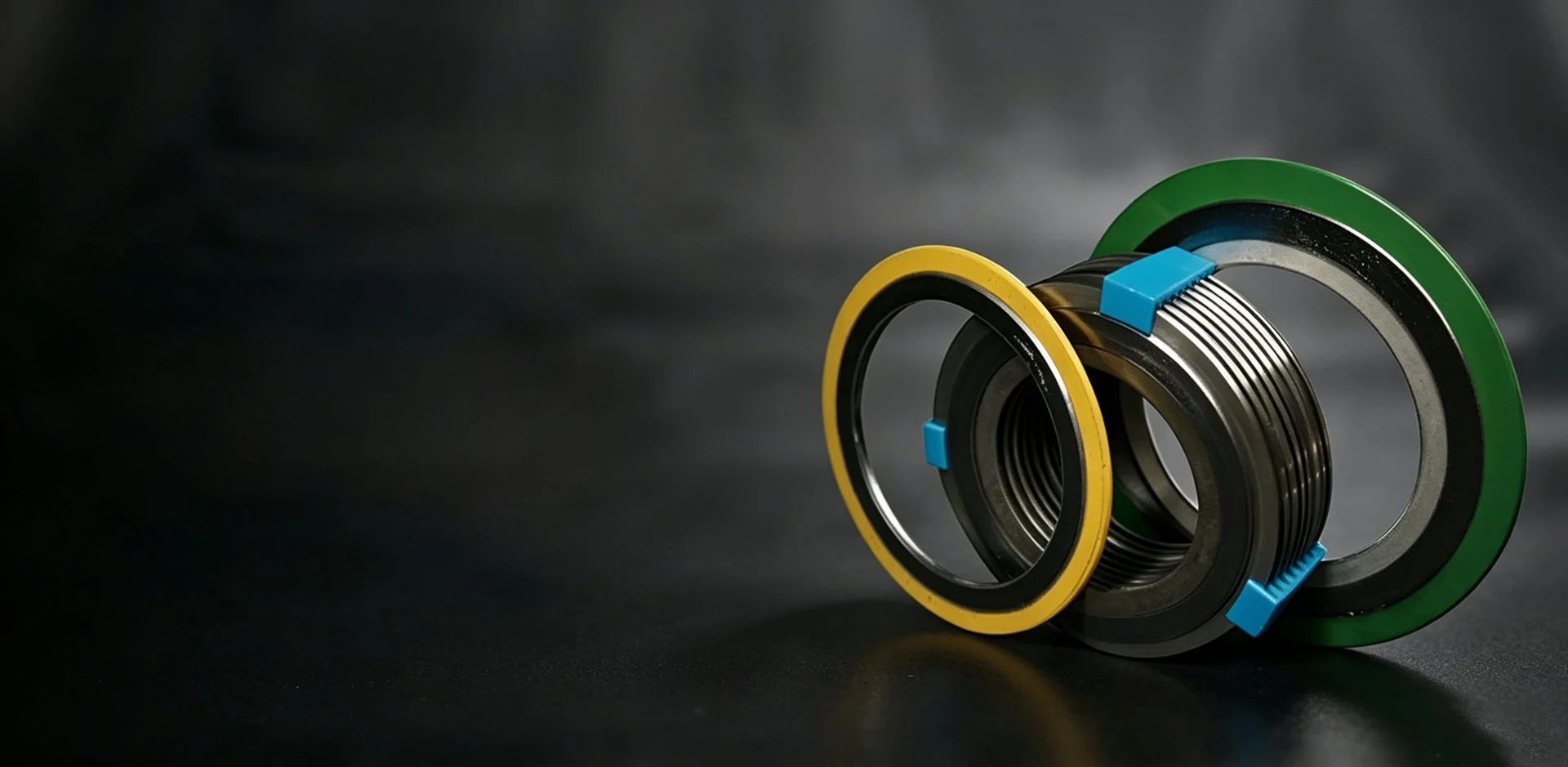

Semi-metallic gaskets offer enhanced sealing performance, durability, and resistance to extreme temperatures and pressures.
Metallic gaskets are crucial sealing components used in high-pressure, high-temperature, and corrosive environments where non-metallic gaskets fail. They function by deforming to fill imperfections between flange surfaces, creating a leak-tight seal. This article explores the main types of metallic gaskets, such as ring-type joints (RTJs), spiral-wound gaskets, and metal jacketed gaskets, detailing their distinct designs, materials, and typical industrial applications. Understanding these variations is key to selecting the optimal gasket for specific operating conditions and ensuring system safety and integrity.
This article provides an overview of the primary categories of non-metallic gaskets.
Discover practical tips for efficiently storing and organizing gasket tools to maintain accessibility and prolong their lifespan.
Professional movers recommend specific packing tools and techniques to ensure heavy furniture is safely protected during transport. This includes the use of specialized materials and steps to prevent damage.
Best practices for maintaining and cleaning injectable sealant tools to ensure durability and optimal performance.
PTFE tubes offer excellent electrical insulation properties, including high dielectric strength, low dissipation factor, and resistance to arcing, making them ideal for use in high-voltage and high-frequency applications across various industries.
PTFE balls offer superior temperature resistance compared to many other materials, maintaining stability across a wide range from extreme cold to high heat.
PTFE hoses offer superior chemical resistance, high-temperature tolerance, and minimal friction, while rubber hoses provide greater flexibility, cost-effectiveness, and suitability for general-purpose, low-pressure applications.
Limitations and disadvantages of PTFE fiber include its high cost, poor abrasion resistance, and difficulty in processing compared to other synthetic fibers.
PTFE (polytetrafluoroethylene) film is available in several primary types, including skived, cast, extruded, and oriented films. Each type is manufactured through distinct processes, resulting in specific properties suitable for different applications. Skived film offers high strength, cast film provides excellent chemical resistance, extruded film is cost-effective, and oriented film delivers superior dielectric strength.
This article explores the various types of PTFE coatings available for metal parts.