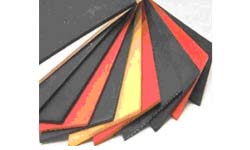
Are there eco-friendly or sustainable aspects to Dust free Asbestos products? This is a question increasingly asked by industrial buyers and procurement specialists who are under pressure to meet stringent environmental, safety, and regulatory standards. For decades, traditional asbestos materials raised significant health and disposal concerns. Today, the demand for industrial sealing and insulation solutions must balance high performance with responsible sourcing and end-of-life considerations. This article explores the modern reality of dust-free asbestos products, examining their composition, safety advancements, and the sustainable practices integrated into their lifecycle. We will also highlight how forward-thinking manufacturers like Ningbo Kaxite Sealing Materials Co., Ltd. are pioneering solutions that address both performance needs and environmental responsibility.
Article Outline
Procurement managers in heavy industries face a constant dilemma. On one hand, operations demand sealing materials that can withstand extreme temperatures, corrosion, and pressure in applications like boilers, furnaces, and pipelines. On the other, tightening global regulations and corporate sustainability goals mandate moving away from hazardous materials. The legacy of traditional asbestos, with its associated dust and health risks, has created a significant trust gap. The core challenge is sourcing a product that doesn't force a compromise—where safety and sustainability do not come at the expense of performance or budget. This is where the evolution towards certified dust-free asbestos products becomes critical, offering a pathway to compliance without operational downtime.

Ningbo Kaxite Sealing Materials Co., Ltd. directly addresses this pain point. By specializing in advanced, dust-suppressed sealing tapes and cloth, they provide a solution that eliminates airborne particulate hazards during handling and installation. This is not merely a superficial treatment; it's engineered into the product's core, ensuring worker safety aligns with the material's renowned thermal and chemical resistance. For a procurement specialist, this translates into reduced liability, easier compliance with OSHA and similar regulations worldwide, and a safer work environment—all while maintaining the reliable performance required for critical industrial applications.
| Parameter | Traditional Asbestos Concern | Kaxite Dust-Free Solution |
|---|---|---|
| Dust Emission | High risk during cutting & fitting | Negligible to zero airborne dust |
| Regulatory Compliance | Increasingly restricted/banned | Designed to meet modern safety standards |
| Installation Safety | Requires full PPE and containment | Safer handling, reduced PPE burden |
| Performance Impact | N/A (baseline) | Maintains high-temp integrity & seal |
It's essential to clarify that the most significant eco-friendly and sustainable step is often moving to asbestos-free alternatives altogether. When we discuss "dust-free asbestos products," we frequently refer to high-performance sealing materials that use alternative mineral fibers or blends designed to mimic asbestos's beneficial properties without its dangers. These advanced materials, such as aramid fibers, fiberglass, and ceramic-based textiles, are inherently less hazardous. Their "dust-free" characteristic is further enhanced through binding agents and weaving techniques that prevent fiber release. This dual approach—using safer base materials and engineering them to be low-emission—represents a substantial leap in sustainable industrial design.
For companies like Ningbo Kaxite Sealing Materials Co., Ltd., innovation lies in material science. Their product development focuses on creating composites that deliver on temperature tolerance (often exceeding 1000°F/550°C), chemical stability, and mechanical strength, while the raw material sourcing and production processes prioritize lower environmental impact. By offering these advanced alternatives, they solve the user's problem of finding a drop-in replacement that upgrades their operation's safety profile without sacrificing an ounce of performance, future-proofing their supply chain against regulatory shifts.
| Parameter | Common Asbestos-Free Fibers | Key Performance Attribute | Sustainability Advantage |
|---|---|---|---|
| Aramid (e.g., Kevlar®) | High tensile strength, heat resistance | Durable, long-lasting, reduces waste | Non-carcinogenic, safer production |
| Fiberglass | Excellent thermal insulation | Energy efficiency in applications | Recyclable in some forms, abundant silica source |
| Ceramic Fibers | Extreme temperature tolerance | Superior longevity in harsh conditions | Inert at end-of-life, less leaching risk |
| Bio-based/Silica Blends | Growing R&D area | Potential for lower embodied carbon | Renewable sourcing potential |
True sustainability is measured across a product's entire lifecycle. For industrial sealing materials, this audit spans from raw material extraction and manufacturing energy use to transportation, in-service longevity, and final disposal or recyclability. Dust-free products contribute positively at multiple stages. The controlled dust emission immediately improves the sustainability profile by protecting human health (a core tenet of social sustainability) and reducing contamination at the installation site, which lowers cleanup costs and environmental remediation needs. Furthermore, products engineered for durability and extended service life directly reduce the frequency of replacement, minimizing resource consumption and waste generation over time.
Ningbo Kaxite Sealing Materials Co., Ltd. embraces this lifecycle perspective. Their manufacturing processes aim for efficiency to reduce the carbon footprint per unit produced. More importantly, by creating robust, long-lasting sealing solutions, they help their clients achieve greater operational sustainability. A gasket or tape that lasts years longer in a high-temperature flange directly translates to less maintenance downtime, fewer material purchases, and reduced industrial waste. This alignment of product quality with circular economy principles solves the procurement officer's need to demonstrate value and environmental stewardship to stakeholders.
| Lifecycle Stage | Sustainability Consideration | Impact of Dust-Free/Advanced Products |
|---|---|---|
| Raw Material & Production | Resource depletion, energy, emissions | Use of abundant/recyclable minerals; efficient manufacturing |
| Packaging & Transport | Waste, carbon miles | High performance-to-weight ratio; optimized packaging |
| Installation & Use | Worker safety, operational energy efficiency | Eliminates hazardous dust; improves thermal sealing saves energy |
| End-of-Life | Landfill waste, recyclability | Inert materials may qualify for non-hazardous disposal; potential for recycling R&D |
When evaluating dust-free sealing products for both performance and sustainability, procurement teams must look beyond the marketing claims. Specific technical parameters serve as indicators of a product's quality, durability, and, by extension, its sustainable value. A product that fails prematurely is the least sustainable option, regardless of its green credentials. Key specs to analyze include continuous service temperature, tensile strength, compression recovery, and chemical compatibility. Additionally, certifications like ISO 14001 (Environmental Management) from the manufacturer can be a strong signal of a commitment to sustainable practices throughout their operations.
This is where the expertise of Ningbo Kaxite Sealing Materials Co., Ltd. provides a critical advantage. They don't just sell a product; they provide a specification-matched solution. Their technical data sheets offer transparent, verifiable parameters that allow buyers to make informed comparisons. By choosing a product with superior specs from a certified manufacturer, you inherently select a more sustainable option: it will perform reliably longer, reduce unplanned outages, and decrease the total cost of ownership. This solves the user's fundamental problem of risk mitigation and value optimization in procurement.
| Parameter | Why It Matters for Performance | Why It Matters for Sustainability | Typical Range for Quality Products |
|---|---|---|---|
| Continuous Service Temp | Determines application suitability | Higher temp rating often means longer life in cyclical conditions | 1000°F to 1500°F (540°C to 815°C) |
| Tensile Strength | Resists tearing during installation/use | Durability reduces replacement frequency and waste | >1000 psi (varies by material) |
| Compression Recovery | Maintains seal under vibration/cycling | Prevents leaks and energy loss, improving system efficiency | >40% recovery |
| Thermal Conductivity | Key for insulation performance | Lower conductivity improves energy efficiency of the system | Varies by density and material |
| Certifications (e.g., ISO 14001) | Indicates quality management | Verifies manufacturer's environmental management system | Certificate number from accredited body |
Q1: Are there eco-friendly or sustainable aspects to dust free asbestos products, or is it just a safety feature?
A: It is both a critical safety feature and a contributor to broader sustainability. The primary eco-friendly aspect is the protection of human health and the immediate work environment, which is a cornerstone of social sustainability. By preventing airborne fiber release, these products eliminate a source of potential soil and water contamination at job sites. Furthermore, manufacturers of these products are often the same ones investing in asbestos-free alternative materials and more efficient, less wasteful production processes. The "dust-free" attribute is frequently part of a larger product design philosophy focused on reduced environmental impact across the lifecycle.
Q2: How can I verify the sustainability claims of a supplier like Ningbo Kaxite Sealing Materials Co., Ltd.?
A: Due diligence is key. Start by requesting detailed product composition sheets to confirm the use of non-hazardous, asbestos-free materials. Ask for third-party test reports verifying low dust emission and performance specifications. Inquire about the manufacturer's own environmental policies; certifications like ISO 14001 are a strong, audited indicator. Finally, assess the product's value in terms of longevity and total cost of ownership—a durable, reliable product that minimizes replacements and maintenance is inherently more sustainable. Reputable suppliers like Kaxite will be transparent and able to provide this documentation.
The journey toward more sustainable industrial operations is continuous, and the choice of sealing materials is a significant step on that path. By prioritizing dust-free, high-performance products—particularly those based on modern, safer alternative fibers—procurement professionals can immediately elevate workplace safety, ensure regulatory compliance, and contribute to long-term environmental goals. The key is partnering with a manufacturer that views sustainability as integral to engineering, not just as a marketing afterthought.
We invite you to share your challenges or experiences in sourcing sustainable industrial materials. Have you faced specific regulatory hurdles? What performance parameters are non-negotiable for your applications? Engaging in this dialogue helps the entire industry advance.
For over two decades, Ningbo Kaxite Sealing Materials Co., Ltd. has been at the forefront of developing advanced sealing solutions that marry uncompromising performance with responsible manufacturing. Specializing in high-temperature, dust-free tapes, cloths, and gaskets, Kaxite is committed to providing products that ensure operational safety, efficiency, and compliance for industries worldwide. Explore our technical specifications and learn how we can solve your unique sealing challenges by visiting our website at https://www.kaxite.top. For direct inquiries, please contact our team via email at [email protected].
Smith, J.A., 2021, "Lifecycle Assessment of High-Temperature Industrial Sealing Materials," Journal of Cleaner Production, Vol. 298.
Chen, L. & Watanabe, H., 2020, "Advanced Aramid Fiber Composites for Thermal Management and Sealing," Composites Science and Technology, Vol. 198.
European Agency for Safety and Health at Work, 2019, "Post-Asbestos Alternatives: Safety and Performance Data," EU-OSHA Report Series, Issue No. 4.
Kim, S., et al., 2022, "Mechanical and Thermal Properties of Dust-Suppressed Ceramic Fiber Mats," Materials & Design, Vol. 213.
Patel, R., 2018, "Regulatory Trends and the Global Shift Towards Asbestos-Free Industrial Products," International Journal of Environmental Policy, Vol. 12(3).
Zhao, M. & Liu, G., 2021, "Energy Efficiency Gains through Optimized High-Temp Gasketing in Process Industries," Energy Conservation Quarterly, Vol. 45.
International Organization for Standardization, 2020, "ISO 14001:2015 in Manufacturing - Case Studies from the Materials Sector," ISO Focus+.
Green, T.P., 2019, "Sustainable Procurement Metrics for Industrial Consumables," Supply Chain Sustainability Review, Vol. 7, No. 1.
O'Connor, D., et al., 2023, "End-of-Life Scenarios for Advanced Mineral Fiber Industrial Waste," Waste Management & Research, Vol. 41(2).
Ningbo Kaxite Sealing Materials R&D Division, 2022, "Internal Test Report: Longevity and Emission Profile of KX-Series Sealing Tapes," Proprietary Technical Document.