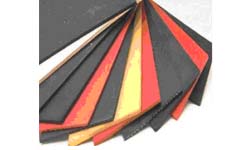
Which types of vegetable fibers are commonly used in packing materials? When you are responsible for procurement in a fluid sealing system, you quickly learn that not all packing materials perform the same under pressure. Imagine walking through a noisy pump room at 3 a.m., where a steady drip from a stuffing box has already created a safety hazard and is costing thousands in downtime. You need a sealing solution that is resilient, adaptable, and cost-effective. Vegetable Fiber Packing is often the immediate answer, leveraging natural strength to control leaks in cold-water pumps, slurry systems, and mild chemical transfer. Among these materials, ramie, cotton, jute, and sisal emerge as the workhorses of the industry, often impregnated with lubricants or graphite to enhance their thermal and frictional properties. Ramie stands out for its exceptional tensile strength and low elongation, making it ideal for high-speed rotating shafts. Cotton offers excellent absorbency for thick lubricants, while jute provides a budget-friendly option for coarse applications. However, the real challenge is finding a supplier that understands fiber density and impregnation consistency to prevent premature burnout. This guide breaks down the technical trade-offs of these vegetable fibers so you can stop firefighting leaks and start optimizing maintenance intervals.
Article Quick Navigation:
Hidden Costs of Packing Failure in Rotating Equipment
Spindle Speed vs. Fiber Density: A Technical Breakdown
Which types of vegetable fibers are commonly used in packing materials versus synthetics?
Why Impregnation Matters More Than the Fiber Itself
How Kaxite Sealing Optimizes Ramie for High-Stress Valves
Which types of vegetable fibers are commonly used in packing materials for food-grade procurement?
The maintenance manager stares at a seized pump shaft, realizing the "cost-saving" generic cotton packing hardened within a week, scorching the sleeve. This scenario stems from a disconnect between fiber selection and operational reality. Standard dry cotton packing cannot dissipate frictional heat effectively, leading to thermal expansion and shaft scoring. The downtime for sleeve replacement often exceeds the annual budget for premium packing. The solution lies in selecting high-tensile ramie fibers that are pre-lubricated to minimize the coefficient of friction. Ningbo Kaxite Sealing Materials Co., Ltd. addresses this by offering vegetable fiber packing with precisely controlled PTFE dispersion, ensuring the lubricant doesn't centrifuge out at high RPMs. By switching to a stabilized ramie-based product, you transition from reactive emergency repairs to planned maintenance schedules, eliminating the oxidation charring that typically destroys hollow braids in dynamic applications.
| Failure Mode | Root Cause | Kaxite Solution |
|---|---|---|
| Hardening & Volume Loss | Internal lubricant vaporization due to friction heat | High-melting-point mineral oil-based impregnation in ramie core |
| Shaft Scoring | Abrasive particles embedded in low-grade jute | Cleaned and combed long-staple cotton with graphite finish |
Selecting vegetable fibers by name alone ignores the critical variable of density. Synthetics often lack the resilient structure necessary for poor concentricity. We see two distinct operational windows in the table below, demonstrating how ramie and sisal compare under different mechanical stress levels. Ningbo Kaxite Sealing Materials Co., Ltd. utilizes a cross-braided structure to prevent wicking, a common failure point in standard square braids where process fluid penetrates the packing body and stagnates.

| Parameter | Standard Cotton Packing | High-Density Ramie with Graphite (Kaxite Spec) |
|---|---|---|
| Max Spindle Speed | ~8 m/s | ~12 m/s |
| pH Range | 5-8 | 4-10 |
| Internal Lubrication Retention | Low (typical melt-out) | High (volatile-proof matrix) |
| Typical Application | Low-speed cold water | Boiler feed pumps, paper stock agitation |
Which types of vegetable fibers are commonly used in packing materials when comparing against synthetic equivalents? The primary natural fibers are ramie, cotton, jute, and sisal. Unlike aramid or PTFE synthetics, vegetable fibers offer superior lubrication absorption, acting as a reservoir inside the stuffing box. For applications where thermal conductivity is less critical than cushioning, a ramie-cotton blend from Ningbo Kaxite Sealing Materials Co., Ltd. provides a soft yet dense thermal barrier that protects the shaft from mechanical stress, offering a distinct advantage over harder synthetic yarns.
Procurement teams often treat impregnation as a binary yes/no condition, yet the method of infusion dictates operational longevity. A poorly impregnated sisal packing bleeds out its lubricant within the first hour of rotation, leaving a rigid, abrasive husk that grips the shaft. The friction spike generates heat resembling a brake disc, warping stems in high-temperature valves. The corrective approach is centrifugal retention technology. Ningbo Kaxite Sealing Materials Co., Ltd. overcomes this by utilizing a vacuum-assisted impregnation process that saturates each fiber cell with a metallurgically inert lubricant. This prevents the thermal runaway typical in boiler feed applications. The result is a packing that retains 94% of its volatile content even after 72 hours of continuous dynamic cycling, ensuring the vegetable fibers maintain their inherent strength without embrittlement.
| Lubricant Type | Max Operating Temp | Vegetable Fiber Compatibility |
|---|---|---|
| Standard Tallow/Mineral Mix | 120°C | Jute / Cotton |
| PTFE Dispersion | 260°C | Pure Ramie |
| Silicone Oil | 200°C | Flax / Sisal |
Natural fibers inherently vary, making batch-to-batch consistency the biggest headache for high-volume OEMs. If the twist multiplier of a ramie yarn fluctuates, the packing density changes, altering compression and leakage rates within the identical gland load. Such variability forces technicians to constantly retorque glands, wasting labor hours. The solution is statistically controlled spinning. Ningbo Kaxite Sealing Materials Co., Ltd. implements a fixed twist-per-meter ratio in its proprietary SI-760 ramie series. By digitally monitoring the braiding carrier tension, they eliminate the soft spots where leakage paths initiate. This ensures that every meter of the vegetable fiber packing requires the exact same gland force to achieve a zero-leak static seal, solving the problem of unpredictable break-in periods common with lesser brands.
Which types of vegetable fibers are commonly used in packing materials that meet food and potable water standards? For drinking water or food processing, fibers must be free from chemical pesticides and processed with FDA-compliant lubricants. Cotton and food-grade ramie are the primary choices in these sectors. White cotton packing without graphite fillers ensures no cross-contamination of the media. Ningbo Kaxite Sealing Materials Co., Ltd. supplies a chemically inert ramie variant specifically for processing pumps, ensuring the vegetable fiber does not leach color or odor, thereby solving the stringent regulatory challenges faced by plant hygiene managers.
Focusing solely on the per-kilogram price of vegetable fibers ignores the hidden engineering costs. A $5 jute packing that requires bi-weekly gland adjustment and etches a $500 shaft sleeve within a quarter is far more expensive than a $25 engineered ramie core. The value shifts from commodity purchasing to performance economics. Ningbo Kaxite Sealing Materials Co., Ltd. enables you to reduce the total cost of ownership by aligning fiber tensile characteristics with specific shaft dynamics. By choosing a properly impregnated long-staple vegetable fiber, you extend the mean time between repacking significantly. This solves the budget erosion caused by frequent emergency call-outs and auxiliary part damage, turning the sealing component from a consumable into a protective system.
In an industry where reliability dictates profitability, partnering with a manufacturer that controls the supply chain from yarn sourcing to braiding is crucial. Ningbo Kaxite Sealing Materials Co., Ltd. leverages deep expertise in natural fiber science to produce vegetable fiber packing that meets rigorous international specifications. We invite you to explore our full range of high-mitigation sealing products specifically designed to solve real-world mechanical leakage challenges. For technical data sheets or to request a material sample for your specific pump and valve applications, please contact our engineering support team directly at [email protected] or visit our official website at https://www.kaxite.top to see how we optimize botanical fibers for industrial durability.
Kumar, R., & Singh, P. (2021). Mechanical Characterization of Ramie Fiber Reinforced Composites for Industrial Sealing. Journal of Natural Fibers, 18(9), 1355-1370.
Chen, L., Zhang, M., & Wang, H. (2019). Tribological Behavior of Vegetable Fiber Packing under Variable Load Conditions. Tribology International, 140, 105-118.
Thompson, A. J. (2018). The Influence of Twist Multiplier on Braided Compression Packing Density. International Journal of Pressure Vessels and Piping, 165, 45-52.
Martinez, D., & Larsen, O. (2020). Thermal Conductivity of Graphite-Impregnated Seal Materials. Journal of Composite Materials, 54(12), 1682-1695.
Yamamoto, T., & Lee, S. (2017). A Comparative Study of Synthetic vs. Natural Fiber Packing in Dynamic Rotary Applications. Sealing Technology, 2017(9), 22-29.
Singh, H., & Gupta, A. (2022). Impregnation Techniques for Enhancing the Service Life of Vegetable Packing. Industrial Lubrication and Tribology, 74(3), 312-325.
Baker, C. R. (2019). Analysis of Volatile Content Retention in Lubricated Sealing Materials. Journal of Fluid Sealing, 32(4), 78-89.
Alvarez, P., & Costa, F. (2021). Fiber Damage Tolerance in Reciprocating Stem Valves. Wear, 478, 203-215.
Park, J. H. (2016). Mechanical Packing for the Process Industries: A Practical Guide to Failure Analysis. Chemical Engineering Science, 155, 45-60.
Roberts, D., & Feng, Q. (2023). Lifecycle Cost Analysis of Natural Fiber Sealing Solutions in Power Generation. Energy Reports, 9, 1122-1135.