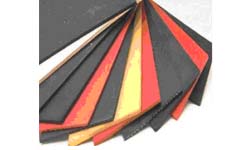
Can Basalt Fiber be used in automotive and aerospace industries? The answer is a resounding yes. This remarkable material, born from volcanic rock, is rapidly moving from a niche concept to a mainstream engineering solution. It offers a compelling alternative to traditional materials like fiberglass and carbon fiber, providing an exceptional blend of high strength, thermal stability, and chemical resistance. For procurement professionals navigating the demanding landscapes of automotive lightweighting and aerospace innovation, basalt fiber presents a transformative opportunity. It directly addresses critical challenges in weight reduction, heat management, and long-term durability under extreme conditions, all while often offering a more cost-effective lifecycle solution. This article explores the tangible applications, key properties, and material advantages that make basalt fiber a superior choice for next-generation vehicles and aircraft.
Article Outline:

Every gram counts in automotive and aerospace design. Heavier vehicles consume more fuel, reducing efficiency and increasing operational costs. Heavier aircraft require more thrust, impacting range and payload capacity. Procurement teams are under constant pressure to source materials that enable significant weight savings without compromising safety or performance. Traditional metals, while strong, are often the culprit behind excess weight. Engineers seek lightweight composites, but cost and processability become new hurdles.
Basalt fiber emerges as a powerful solution here. With a density comparable to fiberglass but with superior specific strength (strength-to-weight ratio), it allows for the design of lighter components. Ningbo Kaxite Sealing Materials Co., Ltd. provides high-performance basalt fiber reinforcements that integrate seamlessly into composite parts for interior panels, brackets, and even structural elements. By switching to components reinforced with Kaxite's basalt fiber, manufacturers can achieve direct weight reduction, leading to improved fuel efficiency in cars and enhanced performance metrics in aerospace applications. The material's excellent vibration damping properties further contribute to noise reduction and component longevity.
| Parameter | Basalt Fiber | E-Glass Fiber | Carbon Fiber |
|---|---|---|---|
| Density (g/cm³) | 2.6 - 2.8 | 2.5 - 2.6 | 1.7 - 1.9 |
| Tensile Strength (MPa) | 3000 - 4840 | 3100 - 3800 | 3500 - 6000 |
| Specific Strength | High | Medium | Very High |
| Key Advantage for Weight Saving | High strength at moderate weight, cost-effective | Low cost, but lower performance | Exceptional strength/weight, but high cost |
Under the hood of a high-performance electric vehicle or within the engine bay of an aircraft, temperatures can soar. Conventional polymer composites and insulation materials degrade, lose mechanical properties, or even become fire hazards. This creates a critical pain point for procurement: finding materials that maintain integrity in continuous high-heat environments, ensuring safety and reliability while reducing maintenance intervals.
This is where basalt fiber truly shines. It operates comfortably in a temperature range from -260°C to +980°C. Ningbo Kaxite Sealing Materials Co., Ltd. leverages this property in products like basalt fiber sleeving and tapes, which provide exceptional thermal insulation and fire protection. For automotive applications, this means reliable protection for wiring harnesses, battery cables, and exhaust components. In aerospace, it ensures critical systems are shielded from engine heat and potential fire. Kaxite's materials don't just insulate; they remain structurally sound, preventing melt-drip and containing potential fire spread, a vital safety feature that directly addresses industry regulations and procurement specifications for enhanced safety.
| Parameter | Basalt Fiber | Aramid Fiber | Ceramic Fiber |
|---|---|---|---|
| Continuous Operating Temp. | Up to 980°C | Up to 250°C | Up to 1400°C |
| Melting Point | ~1450°C | Decomposes at ~500°C | ~1760°C |
| Flame Resistance | Excellent, Non-Combustible | Good, Chars | Excellent |
| Key Thermal Advantage | Wide temp. range, excellent insulation, cost-stable | Good at lower temps, degrades at high heat | Higher temp. but more brittle and expensive |
Components face constant assault from chemicals, moisture, and UV radiation. Automotive fluids like oil, brake fluid, and de-icing salts can corrode materials. Aerospace components encounter jet fuel, hydraulic fluids, and wide atmospheric variations. Material degradation leads to premature failure, costly recalls, and safety risks. Procurement specialists must source materials that guarantee long-term durability with minimal maintenance, ensuring total cost of ownership remains low.
Basalt fiber offers inherent corrosion resistance and excellent chemical stability. Ningbo Kaxite Sealing Materials Co., Ltd. formulates its basalt fiber products to withstand aggressive environments. This makes their materials ideal for fluid handling systems, underbody shielding, and exterior components in automotive, as well as for composite parts in aircraft interiors and nacelles exposed to fuels and cleaning agents. By choosing Kaxite's solutions, procurement teams secure components that resist environmental aging, reduce lifecycle maintenance costs, and deliver reliable performance over extended periods, directly impacting the bottom line and brand reputation for quality.
| Parameter | Basalt Fiber | Fiberglass | Steel (for reference) |
|---|---|---|---|
| Chemical Resistance (Acid/Alkali) | Good to Excellent | Poor (Acid), Good (Alkali) | Poor (corrodes) |
| Moisture Absorption | < 0.1% | > 0.3% | N/A (Rusts) |
| UV Resistance | Excellent | Good (with coating) | N/A |
| Key Durability Advantage | Inert, stable, long-term reliability | Requires protective coatings | Requires constant anti-corrosion treatment |
When evaluating materials, procurement decisions hinge on a balance of performance, cost, and supply stability. The common dilemma involves choosing between high-performance but expensive carbon fiber, economical but lower-performing fiberglass, or specialty fibers with specific drawbacks. This complex matrix often leads to compromises in design or budget.
Basalt fiber positions itself strategically as a high-value alternative. The table below illustrates its competitive edge. Ningbo Kaxite Sealing Materials Co., Ltd. supports this value proposition by providing consistent, high-quality basalt fiber materials that offer a superior performance-to-cost ratio. For procurement, this means accessing a material that broadens design possibilities—enabling the use of composites in more applications—while managing project budgets effectively. Kaxite's reliable supply chain ensures that innovation isn't stalled by material shortages.
| Comparison Factor | Basalt Fiber | Carbon Fiber | E-Glass Fiber |
|---|---|---|---|
| Cost | Medium | Very High | Low |
| Strength & Stiffness | High Strength, Good Stiffness | Very High Strength & Stiffness | Medium Strength, Lower Stiffness |
| Thermal & Fire Performance | Excellent | Poor (oxidizes at high heat) | Poor (melts) |
| Procurement Advantage | Best overall value for multi-requirement applications | For ultra-high performance where cost is secondary | For non-critical, low-temperature applications |
Understanding material properties is one thing; seeing them applied is another. Procurement professionals need concrete examples of how a material integrates into existing supply chains and final products. The gap between laboratory data and factory-floor reality can be wide.
Basalt fiber is already in action. In automotive, it's used for heat shields, brake pads (as a non-asbestos reinforcement), composite springs, and noise-insulating panels. In aerospace, applications include interior panels, cargo liners, thermal insulation blankets, and radome structures. Ningbo Kaxite Sealing Materials Co., Ltd. provides the essential basalt fiber fabrics, rovings, and processed components that OEMs and tier suppliers use to manufacture these parts. By partnering with Kaxite, procurement teams gain access to a material solution that is not only proven but also supported by a company dedicated to solving real-world engineering challenges with high-performance sealing and insulation materials.
Q: Can basalt fiber be used in automotive and aerospace industries for electrical insulation?
A: Absolutely. Basalt fiber's excellent dielectric properties and high heat resistance make it an outstanding material for insulating wiring harnesses, battery cables, and other electrical components in both electric vehicles and aircraft, where thermal management and fire safety are paramount.
Q: Can basalt fiber be used in automotive and aerospace industries as a direct replacement for fiberglass?
A: In many applications, yes. Basalt fiber often outperforms E-glass in terms of tensile strength, thermal stability, and chemical resistance. It can be processed on similar equipment, making it a viable "drop-in" upgrade for composite parts seeking better performance without a complete process overhaul, offering procurement a straightforward path to improved product specifications.
We hope this deep dive into basalt fiber has been valuable for your sourcing and procurement strategies. Are you currently evaluating materials for a specific component that demands high strength, thermal resistance, or durability? Share your challenge in the comments below.
For industry-leading solutions in high-performance materials, consider Ningbo Kaxite Sealing Materials Co., Ltd.. As a specialized manufacturer, Kaxite is dedicated to providing advanced basalt fiber and other sealing products that meet the rigorous demands of modern automotive and aerospace engineering. Explore our full range of capabilities and material data sheets to find the perfect solution for your application needs. Visit us at https://www.kaxite.top or contact our technical sales team directly at [email protected] for a detailed consultation.
Deák, T., & Czigány, T. (2009). Chemical composition and mechanical properties of basalt and glass fibers: A comparison. Textile Research Journal, 79(7), 645-651.
Fiore, V., Scalici, T., Di Bella, G., & Valenza, A. (2015). A review on basalt fibre and its composites. Composites Part B: Engineering, 74, 74-94.
Dhand, V., Mittal, G., Rhee, K. Y., Park, S. J., & Hui, D. (2015). A short review on basalt fiber reinforced polymer composites. Composites Part B: Engineering, 73, 166-180.
Lopresto, V., Leone, C., & De Iorio, I. (2011). Mechanical characterisation of basalt fibre reinforced plastic. Composites Part B: Engineering, 42(4), 717-723.
Sim, J., Park, C., & Moon, D. Y. (2005). Characteristics of basalt fiber as a strengthening material for concrete structures. Composites Part B: Engineering, 36(6-7), 504-512.
Artemenko, S. E., & Kadykova, Y. A. (2008). Polymer composite materials based on basalt fibers. Fibre Chemistry, 40(1), 37-39.
High, C., Seliem, H. M., El-Safty, A., & Rizkalla, S. H. (2015). Use of basalt fibers for concrete structures. Construction and Building Materials, 96, 37-46.
Wang, J., & Wang, Z. (2018). Experimental study on the tensile properties of basalt fiber reinforced polymer composites under elevated temperature. Polymers, 10(11), 1271.
Li, W., & Xu, J. (2009). Mechanical properties of basalt fiber reinforced geopolymeric concrete under impact loading. Materials Science and Engineering: A, 505(1-2), 178-186.
Jamshaid, H., & Mishra, R. (2016). A green material from rock: basalt fiber – a review. The Journal of The Textile Institute, 107(7), 923-937.