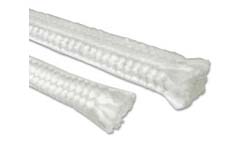
When a production line stops because a fluoropolymer component failed a routine chemical-resistance check, procurement teams often discover the same issue: not all FEP Special Parts are equal. What certifications should I look for in FEP special parts suppliers? The answer goes beyond a single ISO certificate. FEP special parts—custom profiles, liners, seals, tubing, and machined components—serve chemical, semiconductor, food, medical, and electrical applications where purity, dimensional stability, and traceability matter. A supplier should present a documented certification stack: ISO 9001:2015 for quality management, ISO 14001:2015 where environmental controls affect cleanliness, ISO 45001 for safety, material compliance such as RoHS, REACH, FDA 21 CFR 177.1550 where food contact applies, USP Class VI for medical and biopharma use, and third-party test reports for dielectric strength, tensile properties, and dimensional inspection. For FEP, look for lot-level traceability, Certificate of Analysis (CoA), Certificate of Conformance (CoC), and clear statements on regrind content, colorants, and processing aids. Suppliers serving regulated markets may also need IATF 16949, ISO 13485, or NSF/ANSI 51 depending on the end use. A practical audit asks: can the supplier map a part number to resin lot, machine program, inspection data, and packaging label? If not, the certificate is only decoration. Ningbo Kaxite Sealing Materials Co., Ltd. builds this evidence into custom FEP special parts production, so buyers can compare certifications, material reports, and inspection records before release. The checklist below shows how to turn a supplier’s certificate folder into a purchasing decision.
Jump to:
A chemical-equipment buyer receives a polished certificate pack from a new FEP special parts supplier. The pack includes ISO 9001, a RoHS statement, and a generic “FDA compliant” note. It looks complete, but the buyer still cannot answer a basic question: which resin lot was used for the FEP liner on this purchase order, and what test values were recorded? This is the gap between a certificate collection and a usable certification map. For procurement, the goal is not to collect the thickest folder. The goal is to match each certificate to the part’s service risk, then verify that the supplier can reproduce the evidence at lot level.
The practical solution is to build a certification map by application. Start with the quality system certificate and check its scope, accreditation body, and validity. Move to material declarations and confirm they are part-specific, not company-wide. Then request inspection evidence that connects the declared material to the finished FEP special part. For regulated applications, add food-contact, medical, or cleanroom declarations only where they are relevant. This keeps the review focused and prevents suppliers from hiding weak evidence behind unrelated certificates.
Table 1: Certification and evidence parameters for FEP special parts suppliers
| Certification or evidence | What it proves | Best use for FEP special parts | Buyer check |
|---|---|---|---|
| ISO 9001:2015 | Quality management system is documented and audited | General FEP machining, extrusion, and assembly | Confirm scope covers the actual process and site |
| ISO 14001:2015 | Environmental controls are managed | Cleaner production and waste control | Check if the certificate adds value to your cleanliness requirements |
| ISO 45001:2018 | Occupational health and safety controls | Supplier risk screening | Use as a maturity signal, not a product compliance proof |
| RoHS and REACH declarations | Restricted substances and SVHC status | Electrical, industrial, and export markets | Request current, part-level declarations |
| FDA 21 CFR 177.1550 | Food-contact suitability for fluoropolymers | Food-processing and beverage equipment | Match the declaration to resin grade and contact conditions |
| USP Class VI | Biological reactivity testing for medical use | Medical and biopharma fluid paths | Ask for test report scope and sample identity |
| ISO 13485 or IATF 16949 | Regulated quality systems for medical or automotive supply | Highly regulated FEP components | Verify the certificate scope includes the supplied part family |
| CoA and CoC | Lot-specific analysis and conformance statement | Every critical FEP special part order | Check actual values, lot number, specification, and approval date |

A semiconductor-equipment buyer places a repeat order for FEP special parts after a successful first article. Three months later, incoming inspection finds dimensional drift on a critical seal groove. The supplier sends a valid ISO 9001 certificate and a CoC, but no SPC chart, no machine program revision, and no explanation of the resin change. The pain is not the absence of a certificate. The pain is the absence of a process trail that shows how the supplier controls change. For procurement, a quality certificate should open the door to deeper questions about process capability and change control.
The solution is to treat the quality certificate as a starting point, then ask for evidence that the production process is stable. Request first article inspection reports, control plans, critical-dimension capability data, and a change-notification procedure. For FEP special parts, also ask how the supplier controls drying, melt temperature, tool wear, annealing, and packaging. These parameters influence crystallinity, dimensional stability, and sealing performance. A supplier that can show parameter windows and reaction plans is easier to approve than one that can only show a certificate.
Table 2: Process evidence parameters to request from FEP special parts suppliers
| Parameter | Evidence to request | Why it matters | Red flag |
|---|---|---|---|
| First article inspection | FAI report with drawing balloons and actual values | Confirms the part was measured against the drawing | Only a stamped “pass” page without values |
| Control plan | Process steps, inspection points, frequency, and reaction plan | Shows how variation is controlled during production | Generic plan not linked to FEP processing |
| Dimensional capability | Cpk or Ppk for critical dimensions | Indicates whether the process can hold tolerance | Capability data from a different part family |
| Change control | Resin, process, tool, or site change notification procedure | Prevents unapproved material or process shifts | No written notification requirement |
| Process windows | Melt temperature, tool temperature, drying, and annealing records | Supports consistent FEP properties | No recorded parameter limits |
| Inspection equipment | Calibration records for gauges and testers | Keeps measurement results trustworthy | Expired calibration labels or no list |
A food-equipment OEM needs FEP special parts for a filling line. The supplier sends a certificate saying the material is “FDA compliant” and “REACH compliant.” The OEM’s quality team then asks for the resin grade, the food-contact regulation reference, and the migration test position. The supplier cannot connect the statement to the actual part. This is a common scene in procurement: compliance words are present, but the evidence is not traceable. The risk is not only regulatory rejection. It is also a delayed launch, a costly re-test, and a damaged customer relationship.
The solution is to require part-specific material compliance files. The file should identify the resin manufacturer, grade, lot, and applicable declarations. For food contact, request the correct regulation reference for the target market, such as FDA 21 CFR 177.1550 in the United States or Regulation (EU) No 10/2011 where applicable. For medical or biopharma use, request USP Class VI or ISO 10993 evidence only if the application requires it, and confirm the test sample matches the supplied material. For chemical service, request chemical-resistance data for the actual media, temperature, and concentration. A certificate without this context is difficult to defend in an audit.
Table 3: Material compliance matrix for FEP special parts
| Application | Useful certification or declaration | Parameter to confirm | Procurement action |
|---|---|---|---|
| Food and beverage | FDA 21 CFR 177.1550, EU 10/2011, NSF/ANSI 51 where relevant | Resin grade, contact temperature, cleaning chemicals | Request a part-level declaration and keep it with the purchase record |
| Medical and biopharma | USP Class VI, ISO 10993 package where required | Sample identity, sterilization method, extractables review | Confirm the test report covers the supplied compound and process |
| Electrical and electronics | RoHS, REACH SVHC, UL yellow card where relevant | Dielectric strength, volume resistivity, flame rating | Match the declaration to the part number and resin lot |
| Chemical processing | Chemical-resistance report, CoA, CoC | Media, concentration, temperature, exposure time | Ask for test conditions, not only a pass or fail statement |
| Automotive or industrial | IATF 16949 where required, PPAP evidence | Dimensional capability, material certificates, change control | Review the scope and confirm the site is included |
A distributor receives a shipment of FEP special parts with a CoA showing tensile strength and elongation. The packaging label shows a production date, but no resin lot. The CoA shows a lot number, but the supplier cannot link it to the resin certificate. When the customer asks for a traceability review, the supplier sends a new CoA with different values. This scenario exposes a weak documentation system. For procurement, traceability is not a paperwork exercise. It is the ability to follow a finished part back to the material, process, inspection, and packing records within a reasonable time.
The solution is to run a simple traceability test before approving a supplier. Choose one part number and one shipment. Ask the supplier to provide the resin lot, production batch, machine or line, inspection record, CoA, CoC, and packaging label. Then check whether the numbers match across documents. A strong supplier can complete this within one working day. A weak supplier will send general certificates or ask for more time. For FEP special parts, lot control also matters because resin lot changes can affect melt flow, color, and dimensional behavior. A supplier that controls lot release is better prepared to protect your process.
Table 4: Traceability records and red flags
| Record | Expected content | Why buyers need it | Red flag |
|---|---|---|---|
| Resin certificate | Resin manufacturer, grade, lot, date, key properties | Confirms the input material | No resin lot or only a generic data sheet |
| Production batch record | Part number, batch, line, machine, process parameters | Links the part to the process | Batch number appears only on the invoice |
| Inspection record | Critical dimensions, test method, actual values, inspector | Shows the part met the drawing | Pass/fail only with no measured values |
| CoA | Lot-specific test results and specification limits | Supports material and performance release | Same CoA values repeated across different lots |
| CoC | Statement of conformance to drawing and specification | Gives procurement a release document | No part revision or specification reference |
| Packaging label | Part number, revision, lot, quantity, date, supplier | Connects the shipment to records | Label cannot be matched to the CoA lot |
A procurement manager compares three FEP special parts suppliers. Supplier A has many certificates but no lot-level data. Supplier B has fewer certificates but strong traceability and inspection records. Supplier C has the lowest price but cannot provide a current material declaration. Without a scorecard, the decision can drift toward the thickest folder or the lowest quote. The pain is that certificates are not weighted by risk. The result may be a supplier that looks qualified on paper but creates problems during production or audits.
The solution is to score suppliers against the parameters that matter for your application. Give quality system evidence a base weight, then increase the weight for material compliance, traceability, and inspection capability when the part is going into a regulated or critical process. Include commercial factors, but keep them separate from compliance. This approach helps buyers explain the decision internally and gives suppliers a clear path to improve. It also turns the question “What certifications should I look for in FEP special parts suppliers?” into a repeatable evaluation method rather than a one-time document check.
Table 5: Example supplier scorecard for FEP special parts procurement
| Evaluation area | Suggested weight | Evidence to score | Pass condition |
|---|---|---|---|
| Quality system | 20% | ISO 9001 certificate, scope, audit report | Valid certificate with relevant scope |
| Material compliance | 20% | RoHS, REACH, FDA, USP, or other required declarations | Part-specific and current |
| Traceability | 20% | Resin lot to finished part record test | Records match within one working day |
| Inspection capability | 15% | FAI, control plan, calibration, Cpk data | Critical dimensions have capability evidence |
| Process control | 10% | Parameter records, change control, SPC | Written limits and reaction plans exist |
| Commercial and delivery | 10% | Lead time, MOQ, packaging, responsiveness | Meets program needs without compliance trade-offs |
| Improvement response | 5% | Corrective action history and communication | Issues are closed with evidence |
These two groups of questions help buyers move from a generic certificate request to a focused supplier review. Use them during supplier qualification, annual audits, or new-part RFQs.
Group 1: Base Certifications and Material Declarations
Q: Is ISO 9001 enough to approve an FEP special parts supplier?
A: ISO 9001 is a useful baseline, but it is not enough by itself. Confirm the certificate scope covers the actual manufacturing site and process. Then request part-specific evidence such as FAI, control plans, CoA, and CoC. For regulated applications, add the relevant material compliance declarations and traceability test.
Q: Which material declarations should be current for FEP special parts?
A: Request RoHS and REACH declarations for electrical or export markets. For food contact, ask for FDA 21 CFR 177.1550 or the applicable EU food-contact declaration. For medical or biopharma use, request USP Class VI or ISO 10993 evidence where required. The key is that the declaration must identify the resin grade and the part number, not only the company name.
Group 2: Regulated Applications and Evidence Depth
Q: What should I check when a supplier claims FDA or USP compliance?
A: Check the regulation reference, the resin grade, the test report scope, and the sample identity. Confirm that the tested material matches the supplied FEP special part and that the declaration covers the actual contact conditions. A general “FDA compliant” sentence without a part-level link is weak evidence.
Q: How can I verify traceability before placing a repeat order?
A: Ask for one complete record set: resin lot certificate, production batch record, inspection data, CoA, CoC, and packaging label. Then compare the lot and part revision across all documents. If the supplier cannot complete this test quickly, treat traceability as a risk and request a corrective action before release.
Have a drawing, a material declaration, or a certificate pack that needs a practical review? Ningbo Kaxite Sealing Materials Co., Ltd. helps procurement and engineering teams turn FEP special parts requirements into documented, inspectable supply. From custom FEP profiles, liners, seals, tubing, and machined components to lot-level CoA and CoC support, dimensional inspection, and material compliance files, the company supports buyers who need clarity before release. Review capabilities at https://www.kaxite.top or send your question and drawings to [email protected] for a direct response.
Teng, H. (2012). Overview of the Development of the Fluoropolymer Industry. Applied Sciences, 2(2), 496–512.
Gardiner, J. (2015). Fluoropolymers: Origin, Production, and Industrial and Commercial Applications. Australian Journal of Chemistry, 68(1), 13–22.
Ebnesajjad, S. (2013). Fluoroplastics, Volume 2: Melt Processible Fluoropolymers—The Definitive User's Guide and Databook. Plastics Design Library, 1st Edition.
Rae, P. J., and Dattelbaum, D. M. (2004). The Properties of Poly(tetrafluoroethylene) (PTFE) in Compression. Polymer, 45(22), 7615–7625.
Ameduri, B. (2009). From Vinylidene Fluoride (VDF) to the Applications of VDF-Containing Polymers and Copolymers: Recent Developments and Future Trends. Chemical Reviews, 109(12), 6632–6686.
Scheirs, J. (1997). Modern Fluoropolymers: High Performance Polymers for Diverse Applications. Wiley Series in Polymer Science, 1st Edition.
Drobny, J. G. (2016). Fluoropolymers and Their Applications. Handbook of Specialty Elastomers, 2nd Edition, 1–30.
Kim, J., Park, S., and Lee, H. (2018). Effects of Filler Content on the Mechanical and Tribological Properties of FEP Composites. Journal of Applied Polymer Science, 135(18), 46210.
Brown, E. N., and Truong, Q. (2010). Chemical Resistance of Fluoropolymers in Aggressive Media. Journal of Fluorine Chemistry, 131(6), 687–694.
Tabata, Y., and Oshima, A. (2012). Radiation Effects on Fluoropolymers and Their Industrial Applications. Radiation Physics and Chemistry, 81(8), 1120–1125.