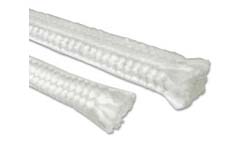
Can PTFE micro porous filtration tubes be sterilized or autoclaved? Picture the scene: a liquid-handling project is two weeks from commissioning, and the qualification team asks for the sterilization cycle, the maximum number of autoclave runs, and documented evidence that the filter element still holds its bubble point and retention rating afterwards. The short answer is yes — with conditions. PTFE micro porous filtration tubes belong to one of the most chemically and thermally robust polymer families available, with continuous service temperatures up to roughly 260 °C and a crystalline melting range of about 327 °C. Steam sterilization at 121 °C for 15–30 minutes, or a 134 °C flash cycle of three to four minutes, therefore sits comfortably inside the material's operating window. The membrane itself is almost never the limiting factor. What limits a real filter assembly is everything around the membrane: the support layers, the end caps, the potting or bonding agent, the O-rings, and the housing. When a filter element fails after autoclaving, the failure usually shows up as a loss of burst pressure, a shifted bubble point, or a discolored bond line rather than as damage to the PTFE itself. For procurement teams, that distinction decides whether you can approve a supplier from a specification sheet alone or whether you need a validation package with extractables data, cycle counts, and lot traceability. This guide walks through the practical answers: what steam actually does to a PTFE micro porous filtration tube, which sterilization methods work and which ones quietly destroy performance, which parameters belong on your purchase order, and how to read a supplier's documentation before the first box is unpacked.
Most sterilization problems do not start in the autoclave — they start in the email thread three weeks earlier. A buyer receives an RFQ for PTFE micro porous filtration tubes for a sterile filling line, a vaccine clarification step, or a corrosive chemical dosing skid. The technical reviewer asks one simple question: can this element be steam sterilized in place or in an autoclave, and how many cycles will it survive? If the answer comes back as a vague "PTFE is inert," the project loses a month. Qualification teams need numbers, not adjectives. They need a maximum continuous service temperature, a stated cycle count, a bubble point before and after sterilization, and a clear statement of which part of the assembly is expected to age first.
The solution is to evaluate the filter element as a system, component by component, and to lock the sterilization method before the purchase order is signed. PTFE is chemically inert and extremely hydrophobic, and it resists almost every common disinfectant, acid, base, and solvent. The components that usually age are the ones that give the element its mechanical shape.
| Element Component | Typical Material | Steam 121 °C | Steam 134 °C | Practical Note |
|---|---|---|---|---|
| Micro porous membrane | Expanded PTFE | Excellent, 100+ cycles | Excellent | Chemically inert, dimensionally stable |
| Support / drainage layer | PTFE or PP | Excellent | Good | Verify PP grade if present |
| End caps and adapter | PTFE, PVDF, PP | Good to excellent | Grade dependent | Check heat deflection temperature |
| Potting / bonding resin | Epoxy, PU, thermoplastic | Grade dependent | Often the weak link | Request bond-line data |
| O-rings / gaskets | Silicone, EPDM, FKM, PTFE | Good | FKM and EPDM preferred | Replaceable, plan spares |
Here is the scenario that catches buyers out: a maintenance team runs a 134 °C gravity-displacement cycle, opens the door, and pulls out a filter whose end caps have crept out of tolerance. The membrane is perfect. The assembly no longer seals. The fix is not to abandon PTFE — it is to match the cycle to the hardware and to record it in the standard operating procedure.
Saturated steam at 121 °C for 15 to 30 minutes is the standard cycle for pharmaceutical and food-contact filter elements, and PTFE micro porous filtration tubes handle it with a wide margin. A 134 °C cycle of three to four minutes is also acceptable for most PTFE-based constructions and is used where faster turnaround matters. What deserves attention is the thermo-mechanical stress of the cycle rather than the temperature alone: differential pressure across a wetted hydrophobic membrane during steam-in-place, condensation trapping inside the pleat pack, and repeated heating and cooling of the bond line.
Three parameters belong in every autoclave procedure written for a PTFE filter element. First, wet the membrane or confirm that the housing vents properly, because trapped air blocks steam penetration and creates cold spots. Second, keep the pressure differential across the element within the manufacturer's rating during both the heating and cooling phases. Third, allow a full drying stage before removal so residual condensate does not carry contaminants back into the pore structure.
| Parameter | Recommended Value | Why It Matters |
|---|---|---|
| Sterilization temperature | 121 °C standard; 134 °C short cycle | Far below PTFE melting point of ~327 °C |
| Hold time | 15–30 min at 121 °C; 3–4 min at 134 °C | Balances lethality against polymer stress |
| Max differential pressure | Per element rating, typically 0.1–0.3 MPa | Protects pleats and bond lines |
| Cycle count before requalification | 50–100 cycles typical | Sets a documented replacement interval |
| Post-cycle test | Bubble point and integrity test | Confirms retention is unchanged |
| Cooling and drying | Full dry stage, ambient cool-down | Prevents condensate and re-wetting issues |
The pain point here is a specification sheet that lists "sterilizable" without naming the method. A buyer selecting a filter for a single-use assembly may assume gamma irradiation is harmless because it is harmless to polypropylene and polysulfone. With PTFE, that assumption is expensive. Room-temperature gamma irradiation causes chain scission in PTFE, and the damage accumulates with dose. A tube that passes an integrity test at 25 kGy may fail retention after a second dose, and the loss is not visible on the surface.
The practical solution is to assign each sterilization method to the construction it suits. Ethylene oxide is fully compatible with PTFE and is the usual choice for heat-sensitive assemblies, provided a validated aeration step removes residuals. Chemical disinfection with peracetic acid, hydrogen peroxide blends, sodium hypochlorite, or alcohols is chemically benign to PTFE and is common in water treatment and chemical processing. Dry heat above 200 °C is technically tolerable for PTFE but will destroy most end caps and seals, so it is rarely a realistic route for a finished element.
| Method | Compatibility with PTFE Tube | Typical Conditions | Key Risk |
|---|---|---|---|
| Saturated steam / autoclave | Excellent | 121 °C, 15–30 min | Bond line creep, condensate |
| Ethylene oxide | Excellent | 40–60 °C, validated aeration | Residual EO and ECH |
| Gamma irradiation | Poor to fair | 15–25 kGy | Chain scission, hidden loss of retention |
| Peracetic acid / peroxide | Excellent | 0.1–2 % solutions | Residue rinsing, seal attack |
| Alcohols (IPA, ethanol) | Excellent | Wipe or flush | Hydrophobic wetting, flammability |
| Dry heat | Good for PTFE only | 160–200 °C | Destroys caps and seals |
Q: Can PTFE micro porous filtration tubes be sterilized or autoclaved multiple times?
A: Yes. A well-built element with PTFE membrane, PTFE or high-grade polymer supports, and heat-resistant potting commonly tolerates 50 to 100 steam cycles. The membrane itself shows almost no change; the requalification interval should be set by the behavior of the bonding resin and the O-rings, which you confirm through periodic bubble point and integrity testing rather than by assumption.
Q: Does autoclaving change the pore size or flow rate of a PTFE tube?
A: Not when the cycle stays within the manufacturer's temperature and differential pressure limits. Expanded PTFE is dimensionally stable through steam sterilization, so pore size distribution and retention rating remain unchanged. If flow drops noticeably after a cycle, the cause is usually incomplete drying or condensate held inside a hydrophobic pore structure, not a permanent change in the membrane.
The scene repeats in every regulated plant: an auditor asks for the sterilization validation file, and the buyer discovers that the folder holds a datasheet and nothing else. No cycle count, no extractables study, no statement of which resin system was used for the potting. The project does not fail on filtration performance — it fails on documentation.
The solution is to treat the sterilization claim as a procurement item with its own acceptance criteria. Ask for the maximum continuous service temperature of the complete element, the recommended steam cycle, the rated differential pressure, USP Class VI or equivalent material statements, and a lot-level certificate of conformity. Ningbo Kaxite Sealing Materials Co., Ltd. builds PTFE micro porous filtration tubes with these requirements designed in from the start: controlled pore structure, sealed and pressure-tested assemblies, and documentation that answers the questions your qualification team will ask before they ask them.
| Procurement Checkpoint | What to Request | Acceptance Criterion |
|---|---|---|
| Temperature rating | Continuous and peak service data | At least 200 °C continuous |
| Pore size and retention | Bubble point and challenge test data | Within stated tolerance per lot |
| Sterilization validation | Cycle count and post-cycle integrity | Documented ≥ 50 steam cycles |
| Material compliance | USP Class VI, FDA-compliant resins | Certificates on file |
| Chemical resistance | Compatibility chart for line chemistry | Covers all process fluids |
| Traceability | Lot number and certificate of conformity | Matches delivered packaging |
Q: Should the filter be autoclaved before first use or after installation?
A: Both routes are used. Autoclaving the element separately before installation protects the bond line from mechanical stress and lets you integrity-test it immediately afterwards. Sterilizing in place after installation saves handling risk but requires a validated vent path so the hydrophobic membrane does not become an air lock. Whichever route you choose, write it into the batch record and use the same cycle every time.
Q: What causes a PTFE filter to fail after sterilization, and how is it prevented?
A: Failures after steam sterilization are almost always mechanical rather than chemical — a bond line that was never rated for the cycle, an O-ring replaced with the wrong elastomer, or a pressure spike during steam-in-place. Prevention is straightforward: confirm the resin system temperature limit, keep differential pressure inside the rating, replace elastomers on a schedule, and run an integrity test after every sterilization cycle.
If your next project involves a sterile liquid line, a corrosive chemical duty, or a vent application where moisture and repeated steam cycles are unavoidable, the fastest way to remove uncertainty is to put the question in front of an engineer who builds these elements every day. Share your operating temperature, sterilization method, target pore size, and connection type, and you will get a configuration recommendation plus the documentation your qualification team needs.
Ningbo Kaxite Sealing Materials Co., Ltd. is a manufacturer of PTFE micro porous filtration tubes and high-performance sealing components, serving pharmaceutical, food and beverage, chemical processing, and water treatment customers worldwide. The company combines in-house PTFE processing, controlled pore structure engineering, and full dimensional and integrity testing to deliver filtration elements that hold their retention rating through repeated steam sterilization. From material selection and pore size customization to lot traceability and material compliance certificates, Kaxite supports buyers through the entire qualification cycle. Explore the product range at https://www.kaxite.top or send your specification directly to [email protected] for a technical response.
1. Jornitz, M.W., Meltzer, T.H., 2008. Sterile Filtration: A Practical Approach. PDA Journal of Pharmaceutical Science and Technology, 62(3).
2. Sundaram, S., Ramasamy, R., 2011. Thermal stability and autoclave resistance of expanded polytetrafluoroethylene membranes. Journal of Membrane Science, 379(1–2).
3. Levy, R.V., 2003. Sterilization compatibility of polymeric filter media in biopharmaceutical processing. PDA Journal of Pharmaceutical Science and Technology, 57(4).
4. Kim, J.H., Park, S.Y., 2014. Effects of repeated steam sterilization cycles on the integrity of hydrophobic filtration membranes. Separation and Purification Technology, 132.
5. Zhang, L., Wang, H., 2016. Gamma irradiation induced degradation of polytetrafluoroethylene and its influence on filtration performance. Radiation Physics and Chemistry, 125.
6. Müller, K., Becker, T., 2012. Ethylene oxide sterilization of heat-sensitive filter assemblies: residual analysis and validation. Pharmaceutical Engineering, 32(5).
7. Chen, Y., Liu, Q., 2018. Chemical resistance of PTFE membranes in peracetic acid disinfection systems. Journal of Industrial and Engineering Chemistry, 61.
8. Sarker, M.A., Hasan, M., 2019. Bubble point integrity testing as a post-sterilization quality indicator for micro porous filters. Filtration and Separation, 56(2).
9. Rossi, G., Bianchi, F., 2015. Pore structure stability of expanded PTFE under thermal cycling. Journal of Applied Polymer Science, 132(18).
10. Nakamura, T., Ito, K., 2020. Extractables and leachables from filter housings and potting resins after autoclaving. Journal of Pharmaceutical and Biomedical Analysis, 185.
-