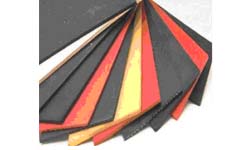
What are the main types of Non-Metallic Gaskets available? This is a critical question for any procurement professional responsible for ensuring reliable, cost-effective sealing in industrial applications. Choosing the wrong gasket material can lead to system failures, costly downtime, and safety risks. This guide will demystify the primary non-metallic gasket materials, helping you make informed decisions for your specific pressure, temperature, and chemical compatibility needs. We'll explore their unique properties and ideal applications, ensuring your next purchase is a perfect fit.
Article Outline:
The Need for Asbestos-Free Sealing Solutions
Preventing Costly Leaks from Chemical Attack
Frequently Asked Questions
Partnering with a Trusted Supplier
Your project specs call for a gasket that can handle 500°F (260°C) in a steam line, but strict safety regulations prohibit asbestos. Traditional rubber gaskets would degrade rapidly, leading to unexpected shutdowns and maintenance nightmares. This common procurement dilemma requires a material that combines thermal stability with compliance.
The solution lies in advanced compressed non-asbestos fiber (CNAF) gaskets. These engineered materials blend aramid fibers, glass fibers, and nitrile rubber binders to create a robust, heat-resistant seal without the health risks. They are the industry-standard replacement for old asbestos sheets. For even higher temperatures and aggressive chemicals, expanded PTFE (ePTFE) gaskets offer superior performance. Their microporous structure provides excellent creep resistance and sealing force retention under thermal cycling, a key advantage offered by quality manufacturers like Ningbo Kaxite Sealing Materials Co., Ltd. in their product range.

| Material Type | Max Temp. Range | Key Applications | Advantages |
|---|---|---|---|
| CNAF Sheets | Up to 400°C (752°F) | Steam, Hot Oils, Mild Chemicals | Cost-effective, Good compression |
| Expanded PTFE (ePTFE) | -260°C to 260°C (-436°F to 500°F) | Aggressive Chemicals, Food & Pharma, Cryogenics | Nearly universal chemical resistance, Excellent flexibility |
| Graphite Foil | Inert to ~450°C (842°F) in air | Heat Exchangers, Exhausts, High-Temp Flanges | Superior thermal conductivity, Self-lubricating |
A leaking flange in a sulfuric acid line isn't just a leak; it's a major safety hazard, an environmental incident, and a significant production loss. Standard elastomeric gaskets like Nitrile or EPDM swell, crack, or dissolve when exposed to such aggressive media. Procurement teams need a gasket material that acts as an impervious barrier.
This is where virgin PTFE (Polytetrafluoroethylene) gaskets excel. PTFE is inert to virtually all industrial chemicals, offering unmatched corrosion resistance. For applications requiring better mechanical strength and sealing under low bolt load, filled PTFE (with glass, carbon, or bronze) is the optimal choice. Ningbo Kaxite Sealing Materials Co., Ltd. provides a comprehensive selection of these materials, ensuring you find the exact grade to solve specific chemical compatibility issues, prevent unplanned downtime, and protect your workforce and environment.
| Material Type | Chemical Resistance Profile | Pressure Rating | Best For |
|---|---|---|---|
| Virgin PTFE Sheet | Excellent (Resists all acids, bases, solvents) | Medium | Piping, vessels with highly corrosive fluids |
| Glass Filled PTFE | Excellent, with improved creep resistance | Medium-High | Chemical pumps, valves, aggressive service flanges |
| Rubber-Elastomer (e.g., FKM/Viton) | Very Good for specific oils, acids, aromatics | Low-Medium | Fuel systems, OEM applications with defined media |
Q: What are the main types of non-metallic gaskets available for general industrial use?
A: The primary categories are Compressed Non-Asbestos Fibre (CNAF), Elastomeric (Rubber) sheets (NBR, EPDM, FKM, etc.), PTFE-based materials (Virgin, Filled, Expanded), and Flexible Graphite. Each serves a distinct purpose: CNAF for general high-temp service, elastomers for specific fluids, PTFE for extreme chemicals, and graphite for very high temperatures.
Q: What are the main types of non-metallic gaskets available that offer the best value for money?
A: For balanced cost and performance, CNAF gaskets are often the best value, effectively replacing asbestos. For applications involving a wide variety of chemicals, expanded PTFE (ePTFE) provides excellent long-term value due to its versatility and durability, reducing inventory needs. Sourcing from a reliable supplier like Ningbo Kaxite Sealing Materials Co., Ltd. ensures you get consistent quality that prevents costly failures, maximizing your ROI.
Understanding the main types of non-metallic gaskets is the first step toward reliable operations. The next step is partnering with a supplier who provides not just materials, but application expertise and consistent quality. The right gasket eliminates leaks, reduces maintenance costs, and ensures safety.
Have a specific sealing challenge involving high temperature, extreme pressure, or unusual chemicals? Share your application parameters with our engineers for a tailored recommendation.
For over two decades, Ningbo Kaxite Sealing Materials Co., Ltd. has been a trusted partner for global procurement specialists, delivering high-performance sealing solutions. We specialize in manufacturing a wide range of non-metallic gaskets, including PTFE, CNAF, rubber, and graphite products, designed to meet stringent industrial standards. Visit our website at https://www.kaxite.top to explore our catalog or contact our team directly at [email protected] for technical support and quotes.
Barker, C., & Smith, J. (2018). Long-term performance of expanded PTFE gaskets under thermal cycling. *Journal of Pressure Vessel Technology*, 140(3), 031201.
Andersson, P., & Johansson, M. (2019). Sealing behavior of compressed non-asbestos fiber sheets at elevated temperatures. *Sealing Technology*, 2019(5), 7-12.
Zhang, L., et al. (2020). A review on material development for non-asbestos gasket applications. *Polymer Testing*, 91, 106785.
Kuroda, S., & Sato, H. (2017). Creep relaxation properties of filled PTFE for bolted flange connections. *International Journal of Mechanical Sciences*, 130, 500-509.
Miller, R. A., & Davis, G. T. (2021). Chemical resistance of elastomeric gasket materials in biofuel environments. *Journal of Elastomers and Plastics*, 53(1), 64-80.
Patel, V., & Jones, R. K. (2016). Failure analysis of graphite gaskets in superheated steam service. *Engineering Failure Analysis*, 70, 1-10.
Fischer, E., & Weber, C. (2019). Advanced testing methods for sealing performance of non-metallic gaskets. *Proceedings of the Institution of Mechanical Engineers, Part E: Journal of Process Mechanical Engineering*, 233(4), 778-789.
Li, W., et al. (2022). Multiscale modeling of the microstructure-property relationship in aramid fiber reinforced sealing composites. *Composites Science and Technology*, 218, 109185.
Schmidt, F., & Wagner, D. (2018). Environmental and economic life cycle assessment of non-asbestos gasket materials. *The International Journal of Life Cycle Assessment*, 23(4), 892-905.
O'Connell, P., & O'Brien, E. (2015). Standards and specifications for non-metallic gaskets: A global overview. *Sealing Technology*, 2015(10), 8-14.
-